Duel7 sportsbook
The newer and clearly weaker half of the operation — with one genuinely unusual feature attached. Rakeback applies to sports wagers, which almost nowhere else does.
| Sport | Coverage | Typical margin | Notes |
|---|---|---|---|
| Football | Deep | 4.0–5.0% | Majors well covered, lower divisions thin |
| Esports | Very deep | 4.5–5.5% | CS2 in particular — the strongest section |
| MMA / UFC | Deep | 4.5–6.0% | Method and round markets available |
| Basketball | Moderate | 4.0–5.0% | NBA covered, college thin |
| Tennis | Moderate | 5.0–6.0% | Majors only |
| Ice hockey | Shallow | 5.0–6.5% | NHL basics |
| Cricket | Shallow | 5.5–7.0% | Major fixtures only |
Margins are typical ranges observed on pre-match markets, not fixed values. A book prices each event individually and the overround varies with liquidity and confidence.
How a sportsbook takes its cut
Casino games have a house edge that can be stated precisely. A sportsbook has a margin, and it works differently enough to be worth explaining.
Convert the odds on every outcome of an event into implied probabilities and add them up. On a fair market they would total 100%. In practice they total somewhat more — 104%, 105%, sometimes considerably higher on obscure markets. That excess is the overround, and it is the book's revenue.
A two-way market priced at 1.91 on both sides implies 52.4% each, totalling 104.7%. The 4.7% is what the book keeps regardless of which side wins, and it is charged on turnover exactly as a house edge is.
This is why margin matters more than any individual price. A book consistently pricing at 4% is meaningfully better than one at 6%, and the difference compounds across every bet you place — while looking like almost nothing on any single one.
Rakeback on sports
Duel returns a share of that margin as rakeback, at a lower rate than the casino side but on the same principle: charged against turnover, credited regardless of outcome, with no wagering requirement attached.
This is rare enough to be worth stating clearly. Most operators exclude sports from loyalty schemes entirely, precisely because margins are thinner than casino edges and there is less room to give back. Stake's rakeback covers sports at its tier rates but requires $10,000 of wagering first; many others simply do not apply it at all.
The practical effect is a modest reduction in the effective margin you face. It does not turn a losing proposition into a winning one — the overround is still there and still larger than the rakeback returned. It narrows it, in the same way the casino-side mechanism does, and the full arithmetic is on the rakeback page.
Comparing margins yourself
The single most useful habit for a bettor, and it takes about thirty seconds per market.
Take every outcome of an event and convert each price to an implied probability — divide 100 by the decimal odds. Add them up. Anything over 100 is the overround.
A three-way football market at 2.40, 3.40 and 3.00 gives 41.7 + 29.4 + 33.3, totalling 104.4%. That book is charging 4.4% on that market. Do the same on the same fixture at two other operators and you will usually find a spread of a percentage point or more.
This matters far more than any individual price looking generous. A book that appears to offer a good number on the favourite is frequently making it back on the other outcomes, and only the total tells you.
It is also the only way to compare a sportsbook honestly, because unlike a casino nobody publishes the equivalent of an RTP figure. The RTP table exists for casino games precisely because that comparison is possible there; on sport you have to do it yourself, per market.
Live betting and settlement
In-play markets exist across the major sports and are noticeably thinner than the pre-match listings imply. On a football match you will find the main markets and little beyond them; on esports the in-play depth is better, consistent with where the operator's expertise sits.
Settlement in our observation was prompt — winnings credited within minutes of an event finishing rather than being held. That is worth noting because delayed settlement is a common complaint at smaller books, and it interacts badly with wanting to withdraw.
There is no cash-out. Once a bet is placed it runs to settlement, which is a real limitation for anyone who uses cash-out as part of how they bet, and standard for a book of this size.
One thing worth watching
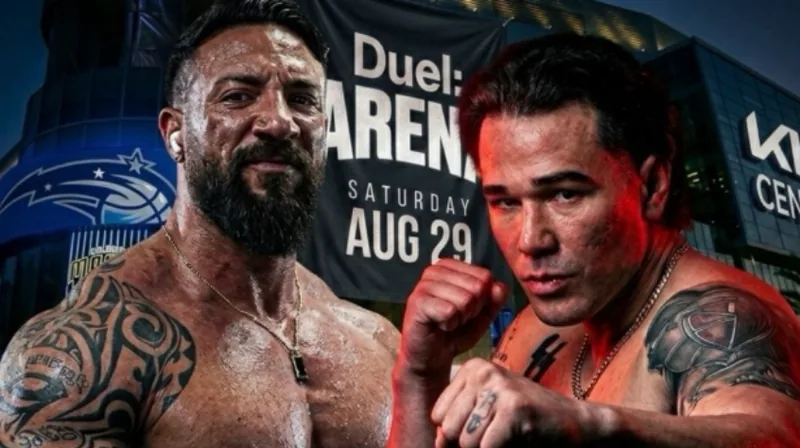
Duel now promotes its own combat sports events under the Duel:Arena banner. Whether the book prices markets on its own promotion is a question worth checking rather than assuming.
A book offering odds on an event its parent company controls raises obvious conflict questions, and operators frequently sit out those events for exactly that reason. If markets do appear, expect them thin and the margins wider than usual — a debut card with two fighters this hard to model is genuinely difficult to price, and the odds will reflect uncertainty rather than insight.
Where the book is genuinely good
Esports. The strongest section by a distance, and the reason is structural rather than accidental: the founder ran CSGOEmpire for the better part of a decade before starting Duel. Counter-Strike markets carry depth you would normally need a specialist book for, and the same applies to a lesser degree across Dota and League. Detail is on the esports page.
MMA. Method of victory, round betting and live in-fight markets are all present, which is more than a lot of general books offer. Covered on the UFC page, and the operator now promotes its own card — see Duel:Arena.
Football majors. Adequate rather than exceptional. The big European leagues and competitions are properly covered with reasonable market depth. The football page has more.
Where it is not
Step outside those categories and the book thins quickly. Lower football divisions, college sports, tennis outside the majors, most of ice hockey and cricket — coverage exists but market depth does not, and margins widen where liquidity is thin.
In-play coverage is also lighter than the pre-match listings suggest. A market that looks well served before kick-off may offer very little once the event starts, which for a bettor who works in-play is a significant limitation.
There is no cash-out feature, no bet builder of the sophistication mainstream books now offer, and no statistics or form integration to speak of. This is a sportsbook attached to a casino rather than a sportsbook with a casino attached, and the difference in investment is visible.
Sports betting against casino play
Worth setting side by side, since the same account holds both and the maths is not the same.
A casino game has a fixed, published edge. A slot at 96.43% will return that figure over enough spins no matter what you do, and after rakeback it behaves like 98.22%. Nothing you know changes it.
A sportsbook margin is an average across all bettors, not a fixed cost to each one. The book prices what it believes the probabilities are, and it is sometimes wrong. A bettor who is more often right than the book, by more than the margin, wins — which is why books limit accounts and casinos do not.
That distinction is the whole appeal of sports betting and it is also where people fool themselves. Beating a 4.5% margin consistently requires being genuinely better than the market, not merely knowledgeable about the sport. The overwhelming majority of bettors are not, and for them a sportsbook is simply a casino game with a wider spread and a longer settlement time.
The honest framing: sports betting sits between the zero-edge Originals and slots on cost per hour, with the difference that your own judgement is part of the outcome. That is a reasonable place to be, and rakeback narrows it further on every wager.
Account limiting
A feature of sports betting with no casino equivalent, and one nobody advertises.
Books restrict accounts that win consistently — reducing maximum stakes, sometimes to trivial amounts. This is standard across the entire industry including regulated operators, and it is the mechanism by which a book protects a margin against bettors who beat it.
We have not tested Duel's limiting behaviour, because doing so would require winning consistently over a long period, and we are not going to claim knowledge we do not have. What we can say is that the practice is universal enough that assuming immunity would be unwise at any operator.
It matters mainly for a bettor who genuinely does beat the market. For everyone else it is theoretical, and the far more likely constraint is the country restrictions on the restricted countries page.
Who it suits
Two groups it fits well, and one thing to plan around.
The single feature that has no equivalent elsewhere is rakeback on sports wagers. Almost every operator ringfences sport away from loyalty mechanics because the margins are already thin, so a share of the book margin coming back on every bet — win or lose, with nothing to claim — is genuinely unusual rather than a marketing line.
It suits a casino player who bets on sport occasionally and values having one balance, one login and no identity verification. It also suits an esports bettor specifically, where the coverage genuinely competes.
It suits less well a bettor who works across many sports at once. Depth concentrates in four categories, and in-play coverage is lighter than the pre-match listings suggest — worth knowing before you plan a strategy around it.
Where it earns its place is the combination nothing else offers: an esports section that competes with specialists, rakeback on every wager, and the same email-only account that runs the casino side. The rakeback page covers what that returns.